
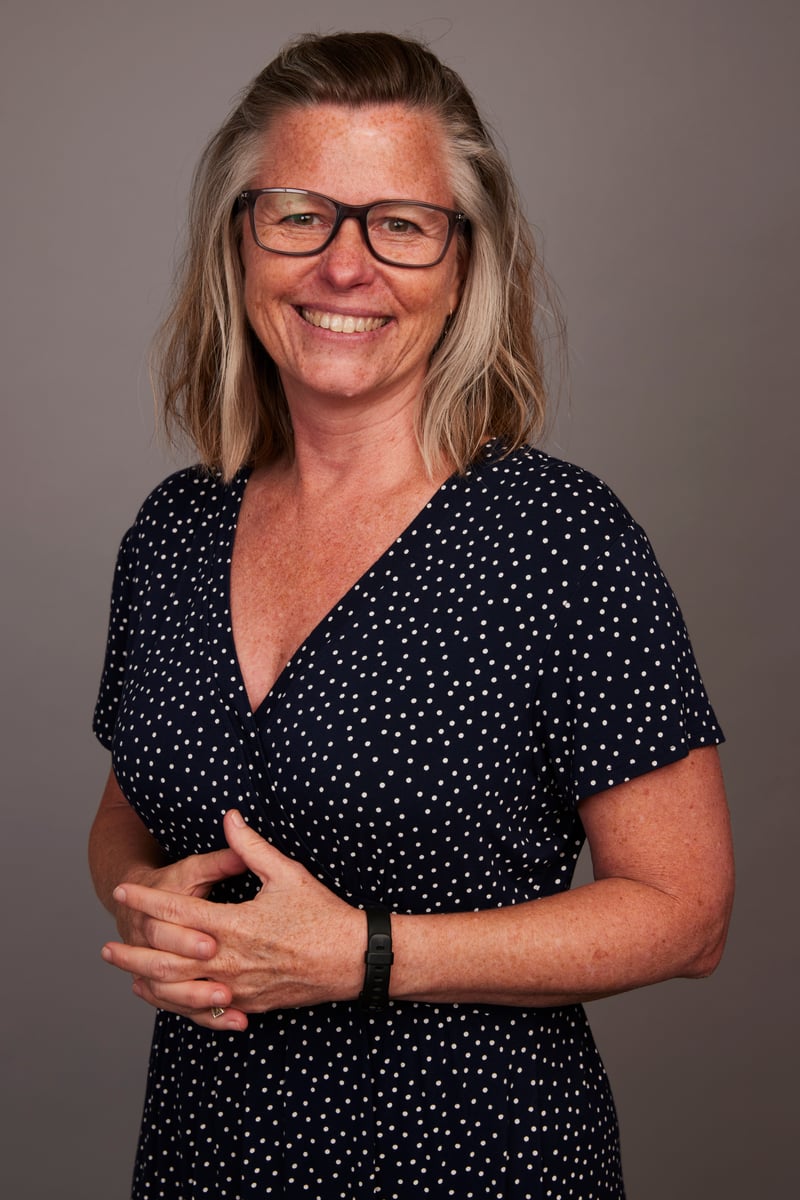
Elizabeth (Beth) Kemper
PT, MPT, WCS · she/her
"Trust needs to be earned. That informs not only my treatments, but also the people I bring on board and every aspect of Kemper Pelvic Physio."
I came to pelvic floor PT through my own body.
After my first pregnancy, I had pelvic pain that nobody could explain. Then a miscarriage that nobody knew how to support me through. Then a prolapse diagnosis with the suggestion that I "learn to live with it." Then perimenopause, with all the symptoms and almost none of the answers. Then menopause.
Each phase came with its own questions. Most of them didn't have ready answers — not from the providers I saw, not from the friends I asked, not from anywhere. I went looking for clinical help that actually addressed what I was experiencing, and I kept hitting dead ends.
That's the gap I built KPP to fill.
Every patient who walks into our office is dealing with something real. My job is to actually look at it, name it, and help you figure out what to do about it. No "just live with it." No "this is normal for your age." No assumptions about what you can or can't handle. Just clinical work that meets you where you actually are — and a clinic where the team around me does the same.
Four specialties, each with their own depth.
Pelvic health is wide. Over the years I've gone deeper in these four areas in particular — where I've taken the most continuing education, where I've treated the most patients, and where I have the strongest sense of what actually works.
Pelvic Pain
Chronic pelvic pain, pain with intercourse, vulvodynia, and the pain conditions that other providers haven't been able to name. Many patients have lived with this for years before finding pelvic PT — including me. There's almost always more we can do than the standard medical workup will tell you.
Hypermobility & hEDS
If you've been told you're "too flexible," diagnosed with hEDS, or referred over from a rheumatologist, the standard pelvic floor protocols probably haven't worked for you. Hypermobile bodies need a different approach — different exercise progressions, different manual work, different home programs. This is where I do some of my favorite work.
Menopause
Genitourinary syndrome of menopause (GSM), dryness, painful intercourse, urinary changes, pressure, prolapse risk — these aren't part of the conversation enough, and they're absolutely treatable. I treat them alongside whatever your gynecologist or hormone provider is doing.
Prolapse
A prolapse diagnosis doesn't mean you stop lifting, stop running, or stop doing the things you love. I fit pessaries in-house, work alongside surgical teams when surgery is the right call, and build progressive rehab plans that actually let you get back to your life. Many patients come in expecting surgery and end up not needing it.
Evidence-based clinically. Human-centered personally.
Sixty minutes, one-on-one.
Every session is a full hour with me — not a hand-off to an aide, not split between three patients. That's how it should be.
Internal work is always your choice.
Many patients see meaningful improvement without ever doing internal work. If we do go there, it's because you've decided it's the right next step — and you can change your mind at any visit, including the first one.
At least half of treatment is teaching.
My goal is for you to understand what's going on in your body and walk away with the tools to manage it on your own. I don't want you to need me forever.
Trauma-informed care, always.
That means consent at every step, clear language about what we're doing and why, the option to pause or stop at any moment, and a clinical space where what you've been through doesn't make the next step harder.
The clinical backbone.
The credentials that get hung on the wall and the continuing education that doesn't always show up there.
- PT, MPT — Master of Physical Therapy, licensed physical therapist
- WCS — Women's Health Clinical Specialist (board certified by the American Board of Physical Therapy Specialties)
- Pelvic floor PT specialty training — hundreds of hours of post-graduate continuing education in pelvic health, pain science, hypermobility, and menopausal care
- Pessary fitting training — certified to fit pessaries for prolapse, stress incontinence, and structural support
- Dry needling certification — for pelvic and musculoskeletal pain management
- Decades in practice — extensive clinical experience treating pelvic conditions across the lifespan
Who I am when I'm not at work.
Mother of two college-age kids who keep me on my toes. Wife. Two cats, one dog (it's a full house). I'm a runner, a dancer, a hiker, a reader, and a travel enthusiast — most of which I almost lost to my own pelvic floor issues before I figured out what was going on.
Getting all of that back changed how I think about treatment. It's why I take the time to actually understand what activities matter to you, not just the symptoms. Returning to a life you love isn't a bonus outcome — it's the goal.
Ready to work together?
If anything I've said here lands, send us a message or schedule directly. If you're not sure I'm the right PT for you, that's a great conversation to have first — and our team will help you figure it out.